
The Future of Manufacturing
A research-driven XR experience, designed for ARM to help people understand and feel confident about automation.
AT A GLANCE
CONTEXT & PROBLEM
Most robots are not safe for the public
ROLE
Lead UX Researcher
XR Experience Designer
Strategy + Narrative Design
TEAM
5-person interdisciplinary team
(Design, XR Dev, 3D, Research)
TIMELINE
May – Aug 2025 (12 weeks)
SKILLS
Mixed-methods research
XR prototyping
Storytelling & systems design
THE MISSION
ARM’s mission is to strengthen U.S. manufacturing by helping people access robotics careers to fortify the workforce and helping manufacturers adopt automation.
THE CHALLENGE
Even with 70k users on their jobs platform RoboticsCareer.org, ARM’s clients are dealing with extreme workforce deficit from a lack of entry level and upskilling audiences. ARM’s audiences are curious about robotics but don’t understand how automation actually works or where they fit.
At the same time, ARM’s Learning Lab is impressive, but loud, unsafe for visitors, constantly changing, and limited in hands-on interactions. Visitors leave interested, but unsure how they belong in automated manufacturing.

THE GAP
DESIGN QUESTION
Layout of the space changes often and is loud
ARM requires a solution that bypasses the facility’s safety and space constraints to deliver a meaningful, hands-on experience in which visitors can envision themselves in automation careers.
How might we create an immersive experience that gets people invested in manufacturing automation?
RESEARCH
HOW PEOPLE LEARN IN XR
We needed to understand how people learn in immersive environments and what helps them feel confident around automation.
Who we spoke to (40 interviews):
Small Plant Owners
Need clarity on automation ROI and safety.
Factory Operators
Want hands-on understanding of robotics workflows.
Students
Look for engaging, accessible ways to explore robotics careers.
Robotics Educators
Need tools to demonstrate automation clearly and safely.
How we learned:
Ethnographic observation at ARM and Automate Conference
XR playtests
15 controlled experiments exploring learning style, realism, narrative, embodiment across 115 testers
Rapid prototyping (MR, VR, physical props)
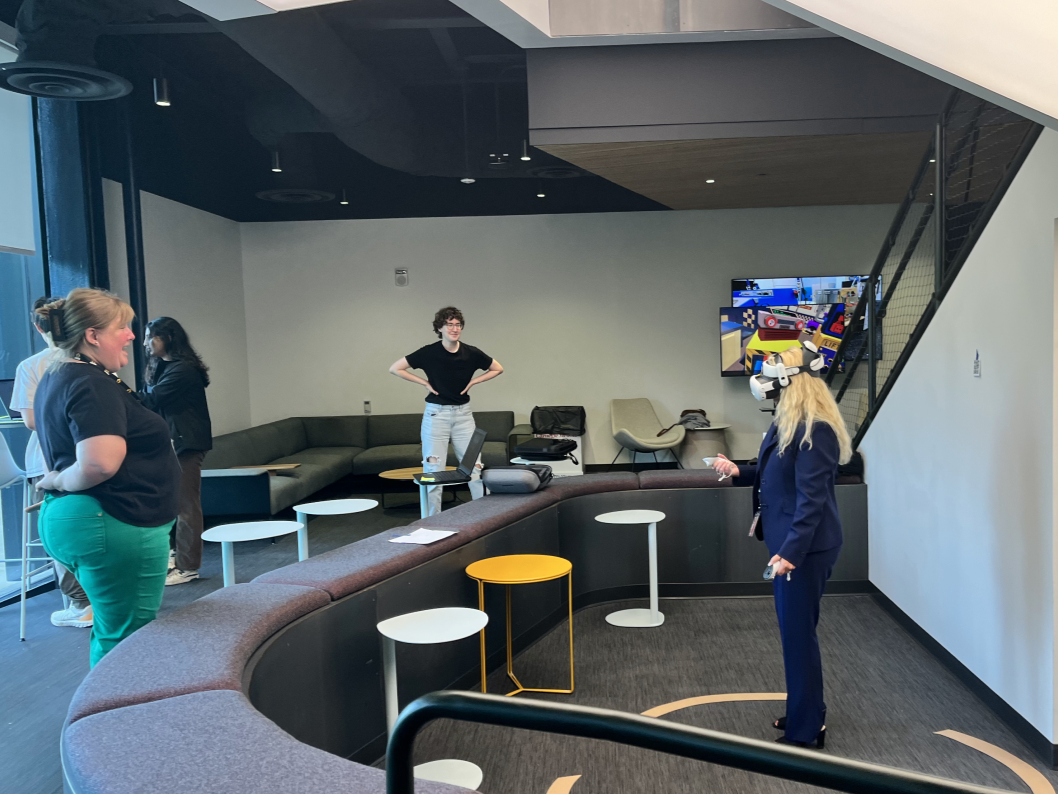
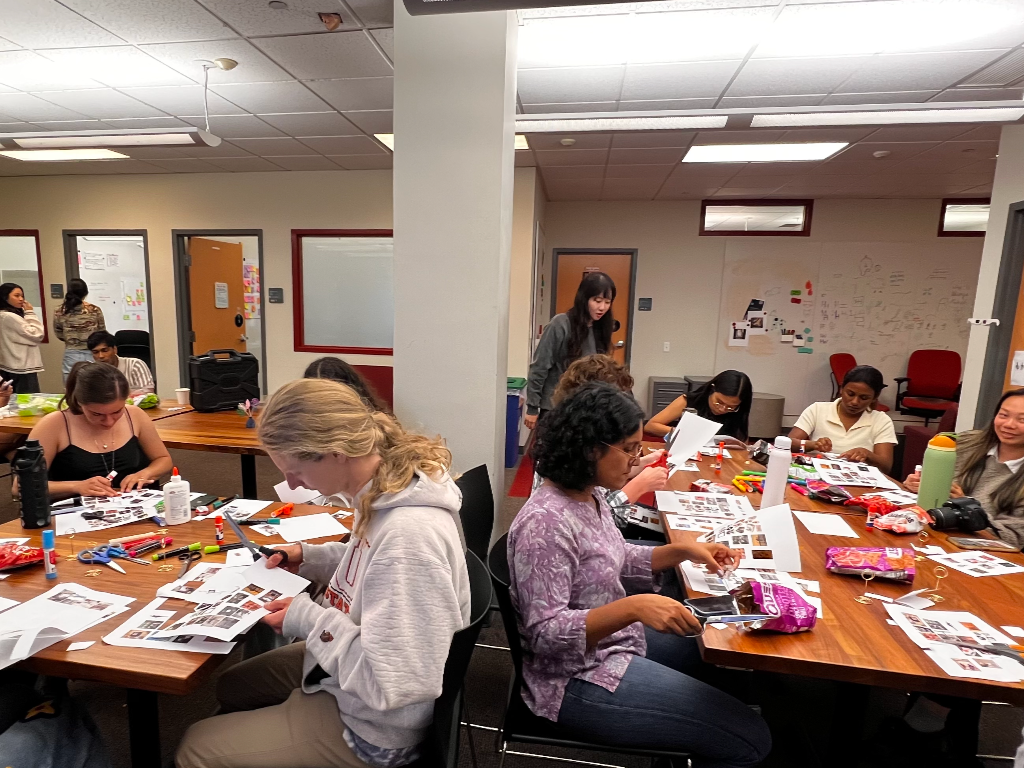
Testing different methods of social interaction in immersive environments.
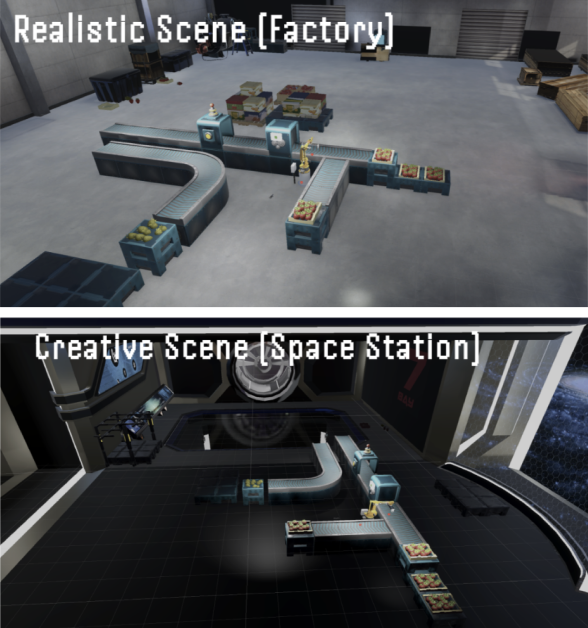
Testing realistic vs creative environments
Testing gamified experiences.
FOUR INSIGHTS THAT SHAPED THE CORE DESIGN PRINCIPLES
Insight
People understood automation better when it felt real but still enjoyed imaginative elements.
Principle
Balance creativity with credibility and keep the experience fun while grounded in real-world tasks.
Insight
Games worked only when the structure, task, and instructions were simple and clear.
Principle
Make gamification accessible by providing clear goals, structure, and easy-to-follow language.
Insight
Participants felt overwhelmed in unfamiliar environments unless guided first.
Principle
Use XR for acclimation; ease people into an automated environment before deeper interaction.
Insight
Manufacturers wanted personalized, relevant guidance, not generic content.
Principle
Use AI to deliver tailored guidance that supports each visitor’s goals.
FINAL CONCEPT
We shaped the final concept through a full narrative arc: beginning with MR onboarding to reduce hesitation, continuing with a VR task to build familiarity and confidence, and closing with an AI assistant that helps visitors take the next step.
MR WORKCELL
This scene leverages our research about how people prefer to learn in extended reality: getting acclimated to an unfamiliar environment. And because mixed reality isn’t fully visually immersive and can be used like a phone, it provides a lower barrier of entry for people hesitant about extended reality.
VR PROBLEM SOLVING TASK
A short, guided VR challenge where users arrange an automated production line and instantly see the impact of their decisions. The environment is intentionally simple and playful, helping visitors build comfort with automation concepts and feel a sense of control before interacting with real robots.
AI CHATBOT
A lightweight AI assistant that helps visitors connect the XR experience to real-world next steps. After completing the VR task, users can ask questions, explore training paths, and get personalized guidance, turning curiosity into action and helping them understand where they fit in automation.
video
MY ROLE + REFLECTING
I served as both the Lead UX Researcher and XR Designer on this project. I drove our generative research and usability testing, led participant recruiting, and synthesized insights into actionable design principles. On the design side, I created the entire VR task, from concept and interaction flow to 3D asset creation and Unity implementation, and helped shape the MR onboarding and AI assistant experience. I also acted as project manager during fast-moving sprints, keeping our team aligned, unblocked, and on schedule.
This project pushed me to design across unfamiliar mediums, integrate research into rapid XR prototyping, and navigate the constraints that come with real-world robotics environments. I learned how to bring clarity to highly technical subject matter, how to scope effectively under evolving client needs, and how to maintain momentum in a complex, fast-paced collaboration.